
Industry
Part of March birthdays: a dated selection and how calendars shape each date
4 details of musicians with March birthdays people miss
Four March-born musicians show how a birth date gets fixed, shifted or copied wrong, from Aretha Franklin to Chopin and the clock that moved a day.
What to take away
- Four musicians with March birthdays carry the details belowAretha Franklin, Frédéric Chopin, Quincy Jones and Johann Sebastian Bach. Each one shows a different way a date gets fixed, shifted or copied wrong.
- Aretha Franklin was born March 25, 1942, in Memphis, and Tennessee vital records confirm the date rather than a press kit.
- Frédéric Chopin was born at Żelazowa Wola, and the parish register at Brochów gives February 22, 1810, against the March 1 date his letters support. An honest entry records both with their sources.
- Quincy Jones, born March 14, 1933, in Chicago, shows what a date cannot do: his middle initial and birthplace separate him from a same-date namesake.
- Johann Sebastian Bach was baptized March 21, 1685, in Eisenach under the Julian calendar. Gregorian sources print March 31, and the baptism is the only record that survives.
- A local clock can shift a date by a day. Kurt Cobain's February 20, 1967, birth in Aberdeen, Washington, sits near a time-zone boundary that compilers get wrong.
- Anniversary programming repeats a date; it does not establish one. Treat it as a secondary source and find the archival edition.
Four March birthdays and the details people miss
Aretha Franklin, March 25, 1942. Tennessee issues birth certificates to the person named or a close relative, so the record can be checked. The date is not in dispute, which makes her the control case.
Frédéric Chopin, March 1, 1810, against February 22. The baptismal register of Brochów parish records the baptism on April 23, 1810, and gives the birth as February 22. The Fryderyk Chopin Institute in Warsaw prints February 22. Chopin's own letters point to March 1. Carry both dates with the source beside each.
Quincy Jones, March 14, 1933. He shares the date with other public figures. His middle initial and birthplace separate him from a same-date namesake in a database, which a date alone cannot do.
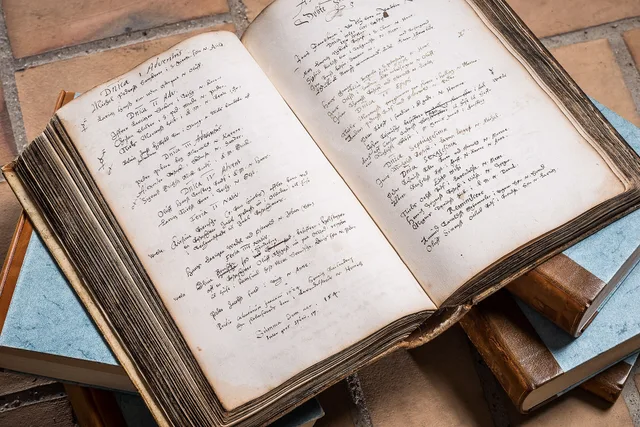
Johann Sebastian Bach, March 21 or March 31, 1685. No birth record survives. His baptism at St. Georgenkirche in Eisenach is dated March 21, 1685, in the Julian calendar, and Gregorian sources give March 31. The documentary edition Bach-Dokumente reprints the register entry. The ten-day gap looks like a data error and is not one.
One method note, not a fifth entry. Kurt Cobain's February 20, 1967, birth in Aberdeen, Washington, sits near the Pacific time line, so a date recorded in one zone and read in another can land a day off. Record the zone beside the date.
How anniversaries fix a date in place
The anniversary is the industry's unit of retrospection. Each one is a reason for a reissue, a broadcast season or a plaque. The date at the center is chosen months ahead and becomes that year's most repeated fact about the person.
It pins the date. Every item made for the occasion carries it, so a compiler who checks later finds a hundred agreeing sources that are really one source.
It also pays for research. An archival edition sends someone back to the documents, and a wrong date surfaces.
The anniversary cycle, step by step
| Moment | What happens to the date |
|---|---|
| During the career | A press date circulates and nobody checks it |
| First round anniversary | Programming repeats the press date at scale |
| Archival edition | A researcher finds the register; the correction appears in a booklet few people read |
| Later anniversaries | Some sources carry the corrected date, most carry the old one |
| Bicentennial year, such as Chopin's 2010 | Festival programs restate both dates and the dispute reaches a fresh audience |
A directory that finds two dates for a musician should ask where each source sits in this cycle. The later, less-copied date is often the researched one. The January musicians page covers the same identifier problem.
How a birthday date drifts
- During careerPress date circulates unchecked
- First round anniversaryProgramming repeats press date
- Archival editionResearcher finds register, correction buried
- Later anniversariesCorrected and old dates both circulate
- CentenaryCorrection adopted or buried again
When a band's founding date becomes a birthday
Groups have formation dates and first-release dates. Members have birth dates. Many databases store both kinds in one field built for people.
Two kinds of date, one column
Person record
- Expected field
- Birth date
- Stored field
- Same column
- Typical error
- Birth date overwritten
- How it spreads
- Copied as any value
- Page warning
- None
Group record
- Expected field
- Formation date
- Stored field
- Same column
- Typical error
- Band gets a birthday
- How it spreads
- Copied as any value
- Page warning
- None
The result is a "birthday" for a band, or a musician whose birth date has been overwritten with the formation date. Once that swap happens it is copied like any other value, and nothing on the page marks it as the wrong kind of date.
For a living musician, the anniversary of a debut is publishable and a birthday is not. The site marks the month and stops, as the March index explains. The famous February page traces how a wrong date enters a record. This page is about what keeps it there.
Common questions
Which four March birthdays does this page name?
Aretha Franklin, March 25, 1942, in Memphis. Frédéric Chopin, March 1, 1810, or February 22 in the parish register. Quincy Jones, March 14, 1933, in Chicago. Johann Sebastian Bach, baptized March 21, 1685, in Eisenach and printed as March 31 in Gregorian sources.
Are anniversary dates more often wrong than others?
They are more often repeated, which makes an error harder to see and a correction harder to spread. Being checked at the centenary makes them, in the end, more often right.
Should a directory adopt a corrected date the moment an archival edition publishes it?
It should record it, with the source, and show the change. Overwriting the old value with no note is the failure that lets the old value return at the next anniversary.
Why is a band's formation date not a birthday?
Because nothing was born. It is an event date of a different type, and the February by-day index shows a related case where a date's rarity, not its fame, decides how it is handled.
What does the January index require of every entry?
It requires the date type to be stated on every entry, so a reader always knows whether a date is a birth, a formation or a release. The January index is the reference for that rule.