
Features
Part of Which parts of May birthdays deserve the closest look?
May Birthdays Facts: Why Sign Confusion Returns
May birthdays facts: why viral lists and fixed zodiac tables revive Taurus-Gemini confusion, and what celebrity dates and birth records can actually show.
May birthdays facts are easy to overread: a birth date is a small piece of information that people ask to do enormous work. Cher's May 20 birthday and Mr. T's May 21 birthday sit on either side of a common Taurus-Gemini cutoff in popular tables. Those dates establish birthdays, not temperament or a complete chart.
What to take away
- A date supports claims about sequence and elapsed time. Almost everything else is added by the reader.
- A pattern found inside a list of famous people is usually a fact about the list, not about births.
- Popular tables often put the Taurus-Gemini handoff around May 20 or 21, but an exact sign near that boundary depends on the chart's system and the birth details.
A sample of May birthdays
A May birthday is a calendar entry first. These widely documented dates show the month's spread:
The dates are not a ranking, and they are not a sample of the population. They are entries that appear in standard reference lists, and each one should be checked against a birth record before it is repeated as a fact.
What a date is genuinely evidence of
Used carefully, a birth date answers a narrow set of questions well. Who was older. How much time passed between two events. Whether someone was of a given age when something happened. Whether a document could have been signed by the person it names. These are arithmetic questions, and arithmetic is what a date is good for.
Each one still depends on the date being right, which is a separate problem. The month pillar for May birthdays is a directory rather than a proof, and every downstream calculation inherits whatever the entry got wrong.
Month and season patterns
Births are not distributed evenly across the year, and the pattern differs by place and period. In the United States, the Centers for Disease Control and Prevention's National Center for Health Statistics (NCHS) publishes natality data that can be used to study population birth patterns. A celebrity birthday directory is not that dataset; related May birthday coverage can orient a reader but cannot establish a seasonal rate.
A fame list is not a sample: names appear because they are documented, discussed, and remembered. None of those filters is neutral about birth month.
Counting entries per month on a site like this one measures the compiler's sources and reading habits; the number looks like a finding but is not. That is the ordinary correlation trap, dressed in a calendar.
Two rules keep it honest:
- Never present a count drawn from a curated list as a rate in the population.
- If a pattern in the list is worth mentioning, say what the list selects for in the same sentence.
Why May's Taurus-Gemini confusion recurs
Why May's Taurus-Gemini confusion recurs
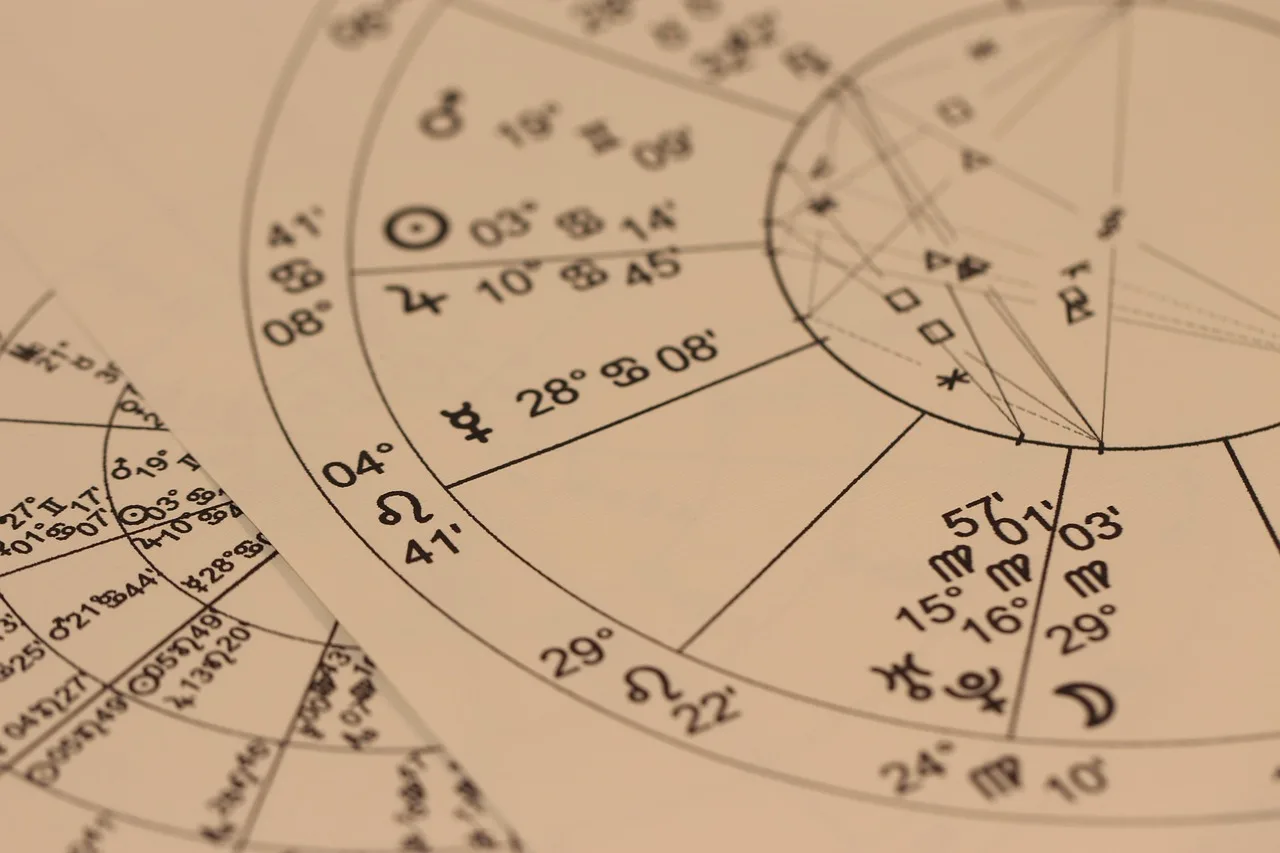
The mapping from a date to a sun sign is definitional: astrology assigns a segment of the year to each sign. In the tropical zodiac used by most US tables, Taurus runs from about April 20 to about May 20, and Gemini runs from about May 21 to about June 20. That May 20/21 handoff is the version most readers see in popular tables and on services such as Astro.com, but it is a convention, not a universal calendar rule.
In tropical astrology, signs are seasonal divisions anchored to the equinoxes and solstices, not exact areas of the modern constellations. Earth's axial precession gradually changes how those divisions align with the stars; the sidereal zodiac uses a star-based reference. This historical difference helps explain why tropical and sidereal charts can assign different signs.
The annual boundary issue is separate: the Sun enters Gemini at a precise moment, and the local date can differ with the year and time zone. Viral lists and fixed-date tables flatten that moment into a simple May 20 or May 21 cutoff. A table that assumes fixed dates may give the neighboring sign.
Mr. T's published birthday is May 21, a date commonly labeled Gemini in tropical date tables. Astro.com calculates tropical charts by default, while Drik Panchang uses the sidereal or Vedic framework. The two services can show different signs because they use different zodiac frameworks, not because the birthday record necessarily conflicts.
To resolve a cusp claim within one system, a chart needs the birth year, time, and place. A date-only page cannot settle the boundary, and the difference between zodiac systems is separate from whether someone believes astrology.
Claims a date cannot carry
| The claim | What is actually required |
|---|---|
| This person's character follows from their month | Something other than a date |
| More notable people are born in May | A population dataset, not a fame list |
| Two people share a birthday, so there is a connection | Nothing at all. In any large group, shared dates are expected |
| Their sign is X | A time and place, once the date sits near a boundary |
| They were the youngest to do it | A verified date and a defined category, both stated |
The last row is where reference pages fail most often. A superlative smuggles in a category and a completeness claim at once, and both need support that a single date does not provide.
Claims vs. What They Need
The claim
- Character follows from month
- Something other than a date
- More notable people born in May
- A population dataset, not a fame list
- Shared birthday means connection
- Nothing at all
- Their sign is X
- A time and place
- Youngest to do it
- Verified date and defined category
What is actually required
- Character follows from month
- More notable people born in May
- Shared birthday means connection
- Their sign is X
- Youngest to do it
Where to look next
The May day by day index shows how the same dates behave when arranged by calendar square rather than by claim. For a narrower group, musicians with May dates is filtered by profession, which changes what a count would even mean.
For comparison, April athletes shows how selection cutoffs can shape a list. The June pillar and March pillar cover their own month-specific calendar context; neither can establish a May seasonal pattern or resolve a May sign boundary.
Common questions
Is there anything to month based personality claims?
Not something a birth date can establish. The date is a label. Any effect would need evidence from outside the calendar, and the burden sits with whoever makes the claim.
Why do two sites give the same person different signs?
Popular tables simplify the Taurus-Gemini boundary to a calendar date, while chart services may calculate the Sun's position using birth details and different zodiac systems. For a May 21 birthday such as Mr. T's, check which system a page uses before treating a sign difference as a disputed birthday.
Can I count entries on this site to find the most common birthday?
You can count them, but the answer describes this site's coverage. It is not a measurement of when people are born.