Guides
Part of What to expect from January birthdays (2027 update)
Historical figures with January birthdays: the practical version
Historical figures with January birthdays: why one person ends up with two dates, the trap that lands on January, and what a converted entry should record.
What to take away
Historical figures with January birthdays sit at the center of a calendar problem.
- An old date carries its calendar with it. Without knowing which calendar the source used, the date is only half recorded.
- Two dates for one person usually means careful editing, not a contradiction you are supposed to settle by picking the nicer one.
- January dates out of English-language records need a second check, because the year number written in the record may not be the year you would assign to it.
Historical figures with January birthdays
Many famous people were born in January. Some, like Isaac Newton and Paul Revere, also show why old January dates need care. The list below uses modern January dates unless the note says otherwise.
| Figure | January date | Known for | Calendar note |
|---|---|---|---|
| Isaac Newton | January 4, 1643 (New Style) | Physicist and mathematician; set out laws of motion and universal gravitation in Principia (1687). | Old Style records give December 25, 1642, so the same birth falls in December in older English sources. |
| Paul Revere | January 1, 1735 (New Style) | Boston silversmith and rider; warned colonial militia before Lexington and Concord in 1775. | Old Style date is December 21, 1734, a direct case of the January year trap. |
| Benjamin Franklin | January 17, 1706 | Printer, scientist and diplomat; helped draft the Declaration of Independence and the U.S. Constitution. | Old Style form is January 6, 1705/06, which shows the double year convention. |
| Alexander Hamilton | January 11, 1755 or 1757 | First U.S. Treasury Secretary; coauthor of the Federalist Papers. | Birth year is disputed, and Caribbean records use different conventions. |
| Joan of Arc | January 6, 1412 (traditional) | French military leader; helped lift the Siege of Orleans in 1429 and was burned at Rouen in 1431. | No birth record survives, so the January 6 date is traditional and disputed. |
| Wolfgang Amadeus Mozart | January 27, 1756 | Composer of The Marriage of Figaro, Don Giovanni and the Requiem. | Salzburg was on the Gregorian calendar by then, so the date is New Style. |
| Edgar Allan Poe | January 19, 1809 | Writer and poet; author of "The Raven" and early detective stories. | Boston records use the Gregorian calendar; the English year start had already changed. |
| Franklin D. Roosevelt | January 30, 1882 | 32nd U.S. president; led the New Deal and was elected four times. | Modern calendar, so no Old Style conversion applies. |
| Martin Luther King Jr. | January 15, 1929 | Civil rights leader; received the Nobel Peace Prize in 1964. | Modern record. |
| Michelle Obama | January 17, 1964 | First Lady from 2009 to 2017; author of Becoming. | Modern record. |
Why one person ends up with two dates
Europe did not change calendars on a single morning. The Gregorian reform spread over centuries, reaching some countries in the sixteenth century, Britain and its colonies in the eighteenth, and parts of the east in the twentieth.
Gregorian reform spread over centuries
- Sixteenth centurySome countries adopt
- Eighteenth centuryBritain and colonies adopt
- Twentieth centuryParts of the east adopt
For a long stretch, two neighboring countries wrote different dates on the same afternoon. A traveler crossing a border changed the date without changing the day.
So a person born inside that gap has a date in the calendar their own parish kept, and a second date in the calendar we now count by. The convention is to label the first Old Style and the second New Style. A well made entry gives both instead of quietly choosing one.
The month index for January birthdays works in modern dates. That is the right default for a general reader and the wrong assumption to carry into an archive.
The trap that lands on January
Before the change, England and its colonies started the legal year on 25 March rather than 1 January. A birth recorded in January, February or most of March was written with what looks to us like the previous year number. A register reading January 1719 may be describing what we would file under 1720.
That is not a rounding error. It moves a person a whole year, and it falls almost entirely on the months at the start of our year. A December entry is not exposed to it in the same way, because those months already sat inside the old year. February records carry exactly the same risk as January ones.
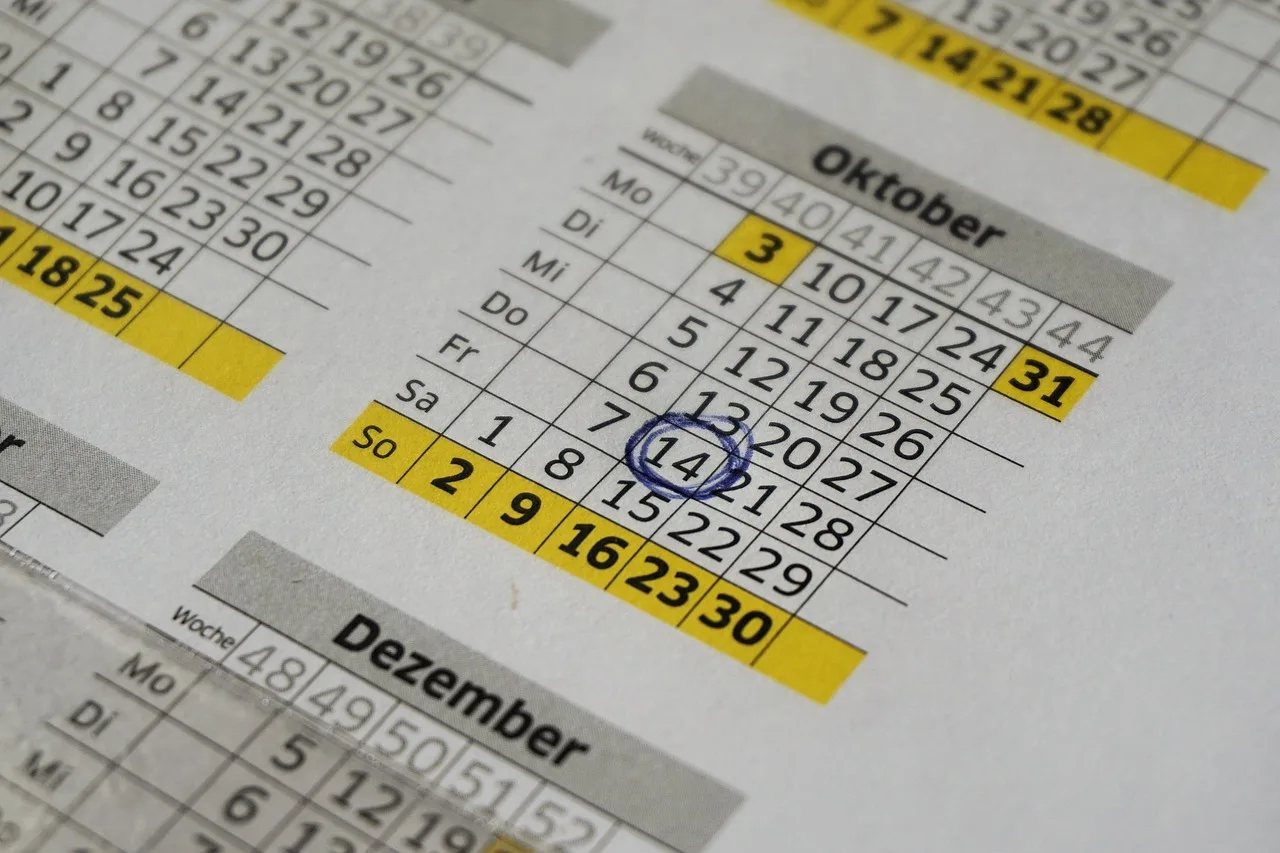
A table like that answers which weekday a date fell on. It cannot tell you which calendar the record used, and that is the field an entry has to carry itself.
What a converted date should record
Field / Keep this
- The date as written
- The original wording and numerals · A conversion can be redone later, a discarded original cannot
- Calendar
- Old Style or New Style, stated plainly · The same digits mean different days under each one
- Year start
- The convention the record itself used · Dates from January to late March can move a full year
- Who converted it
- The edition or editor, not only the result · Conversions differ, and you need to know whose you are repeating
- What was left alone
- Any date kept as found · Half converted runs of dates are the usual failure
When an entry gives you a single date
Most popular lists give one date and no calendar at all. That is not useless, but it is a claim with a hidden assumption inside it. Before you repeat it, work backwards:
Work backwards from a single date
- Ask what the source summarized
- Check for a calendar change
- Look for the 1719/20 double year
- Prefer named registers over nothing
- Treat compiled lists as starting points
- Ask what the source was summarizing. A modern encyclopedia entry is usually a condensation of an older edition, which was itself a condensation of a record.
- Check whether the person lived across a calendar change in their own country. If they did, an unlabeled date is a guess about which system it belongs to.
- Look for the double year form written as 1719/20. Seeing it tells you the compiler understood the problem and handled it.
- Prefer an entry that names the register, parish or archive over one that names nothing.
- Treat a compiled list of famous January names as a starting point for a search, never as the record itself.
Modern subjects do not have this problem. Athletes born in January sit inside a settled calendar, and their dates go wrong for completely different reasons: paperwork, transcription and self-reporting rather than arithmetic.
Common questions
Does the calendar question apply to every historical figure?
No. It applies to people whose records were kept before their own country changed calendars. The date a country switched varies widely, so the answer depends on where the record was made, not on how long ago the person lived.
Which of the two dates should a modern page use?
Whichever one the page says it is using. Consistency and a stated convention matter more than the choice itself. Mixing converted and unconverted dates in one list is the outcome to avoid.
Is a January date more likely to be wrong than a June one?
For records from the old English year, yes, in one specific way: the year number attached to it. The day and month are no more fragile than any other month's.